Behind the Research: Modeling the Impact of COVID-19 in India
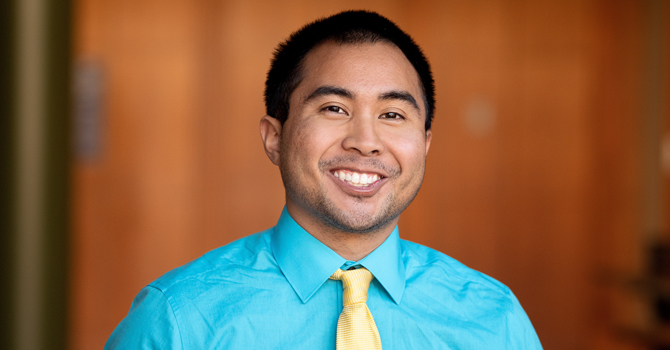
Max Salvatore, MPH '17
Max Salvatore's recent work with the University of Michigan School of Public Health has helped model the impact of COVID-19 on India's population.
We're still accepting applications for Fall 2026!
Apply Today
Max Salvatore's recent work with the University of Michigan School of Public Health has helped model the impact of COVID-19 on India's population.
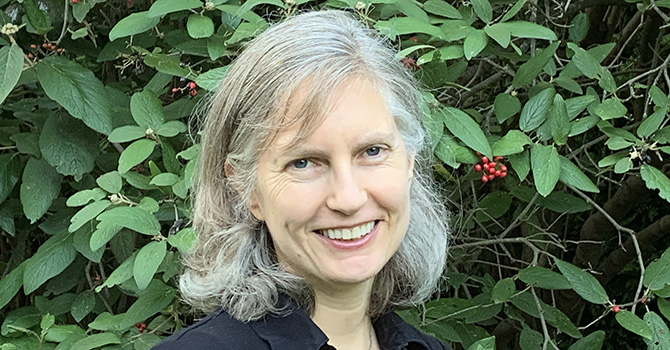
Marie O’Neill, professor of Epidemiology and Environmental Health Sciences at the University of Michigan School of Public Health, uses this idea as a basis for her long-standing research on environmental and occupational exposures—and how they affect human health. We spoke to Marie to learn more about her research and community-based work.
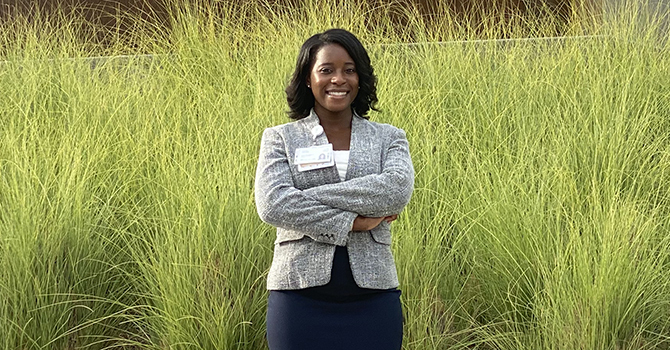
Helping people live healthier lives led alum Cachet Colvard to Michigan Public Health, to Ghana, and now to the United Arab Emirates, where she develops patient-centered health care innovations. She spends a lot of her free time helping other young professionals navigate the complexities of health care leadership.
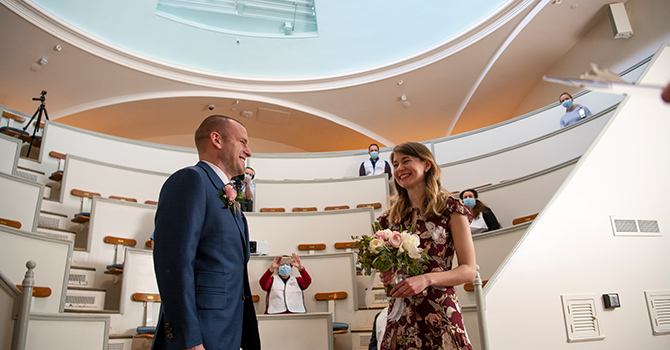
Two epidemiology alums found love here on campus while earning their master’s degrees. When their wedding plans are interrupted by a global pandemic, their community of health colleagues help them get married in a unique ceremony fit for these hardworking frontline heroes.
The field of toxicology within public health benefits from understanding these same mechanisms to inform how toxicity can manifest from an exposure into a health outcome affecting millions of people. That public health seeks to prevent adverse outcomes for large populations contributes to my interest in the field.
Want to spend lots of time outside, meet new people, and see engineering and business processes from the inside out? Then consider studying industrial hygiene, says Sarah Gharib, who reminds us that environmental health sciences is not only an exciting field but one that empowers you to apply your science and engineering skills to help people.