
Master of Public Health Degree in Nutritional Sciences
The Department of Nutritional Sciences at the University of Michigan School of Public Health offers a highly customizable Master of Public Health (MPH) degree for students who wish to pursue careers in the field of human nutrition in a wide range of clinical, community, advocacy, research, policy and governmental settings.
Applicants to the MPH in Nutritional Sciences degree should have a strong interest in science and health. Successful students often have an undergraduate degree in a field of basic or applied science, or, at a minimum, have taken courses in biology, physiology, general and organic chemistry, and biochemistry.
Degree Options

MPH in Nutritional Sciences
2-YEAR PROGRAM | 60 CREDIT HOURS | SUMMER INTERNSHIP
The MPH in Nutritional Sciences degree is a two-year, 60-credit-hour degree with a summer internship for students who wish to pursue careers in the field of human nutrition in a wide range of community, advocacy, research, policy and governmental settings.
All MPH in Nutritional Sciences students are required to complete an internship between their first and second years. The Department of Nutritional Sciences has strong relationships with a variety of sites for students to choose from when starting their summer internship search. Each summer there are several students who are successful in securing global public health internships or opportunities outside of the state of Michigan. All internships are public health-focused with a nutrition component.
In recent years, MPH in Nutritional Sciences students have completed internships at MDining, Food Gatherers, community health and social services organizations, farmers markets, and Washtenaw County Health Department.
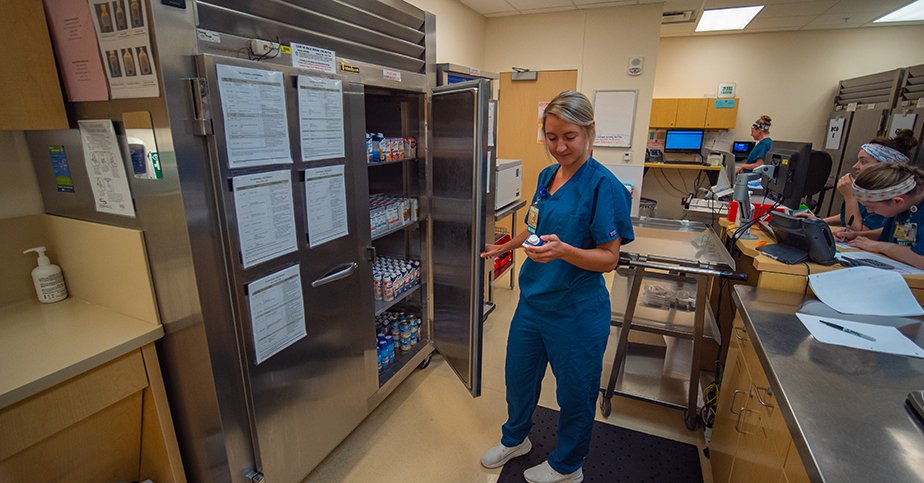
MPH in Nutritional Sciences with Dietetics subplan
2-YEAR PROGRAM | 50+ CREDIT HOURS | 1,000+ HOURS EXPERIENTIAL LEARNING
The Department of Nutritional Sciences provides a direct path for students wishing to become a Registered Dietitian Nutritionist (RDN) by combining didactic learning and supervised practice into an integrated 2-year program of study and field experience. This concentration is available to students pursuing an MPH in Nutritional Sciences, an MS in Nutritional Sciences, or an MS in Clinical Nutrition.
Students will complete more than 1,000 hours in supervised experiential learning as part of the path to becoming an RDN. This fulfills the requirement for the MPH internship.
Program Curriculum and Prerequisites
MPH in Nutritional Sciences students will acquire advanced knowledge and understanding about public health nutrition topics including:
- The biochemistry of cellular nutrition.
- The application of nutritional sciences to individuals, groups, and populations.
- Factors that affect accessibility, adequacy, and safety of the food supply system (production, processing, distribution, and consumption) and the relationship to community food systems assessment and analysis.
- The relationships between food intake, nutrition, contaminant exposure, and biological and chemical hazards.
- Federal, regional, state, and local government structures and processes involved in the development of public policy, legislation, regulations, and delivery of services that affect food intake, nutritional status, and population health.
During the MPH in Nutritional Sciences program’s first years students complete required public health core courses and nutritional sciences core courses. Over the two years, MPH in Nutritional Sciences students have flexibility within their schedule to take classes outside of the Nutritional Sciences department if they choose to do so. For example, MPH in Nutritional Sciences students often take classes at the Ross School of Business, School of Social Work, School for Environment and Sustainability, Gerald R. Ford School of Public Policy, and others. This provides an opportunity to engage with students and faculty from other disciplines.
- Fall Year One: FY1
- Winter Year One: WY1
- Fall Year Two: FY2
- Winter Year Two: WY2
| Course Number | Credits | Course Name | Term |
|---|---|---|---|
| BIOSTAT 501 | 3 | Introduction to Biostatistics | FY1 |
| EPID 600 | 3 | Introdcution to Epidemiology | FY1 |
| PUBHLTH 501 | 6 | Developing Public Health Solutions | WY1 |
| Course Number | Credits | Course Name | Term |
|---|---|---|---|
| NUTR 630 | 3 | Principles of Nutritional Sciences | FY1 |
| NUTR 640 | 3 | Nutritional Assessment | FY1 |
| NUTR 631 | 3 | Metabolism of Vitamans and Minerals | WY1 |
| NUTR 688 | 1 | Nutrition Seminar (year-long course) | FY1 + WY1 |
| NUTR 642 | 3 | Community Nutrition | WY2 |
| NUTR 633 | 3 | Evaluation of Global Nutrition Programs | WY2 |
| Course Number | Credits | Course Name | Term |
| NUTR 601 | 1 | Interprofessional Education and Teamwork for the Nutrition Professional | WY1 |
| NUTR 602 | 3 | Communication, Leadership and Management for Dietetics | WY2 |
| NUTR 510 | 3 | Lifecycle Nutrition | WY1 |
| NUTR 635 | 3 | Food Service and Culinary Science | FY2 |
| NUTR 636 | 2 | Medical Nutrition Therapy I | WY1 |
| NUTR 637 | 2 | Medical Nutrition Therapy II | FY2 |
| NUTR 646 | 3 | Nutritional Counseling | FY1 |
All MPH in Nutrition students will complete the SPH Core and NS Core Courses. In addition, MPH in Nutrition and Dietetics students complete the Dietetics Core Courses.
Students entering with prior nutrition classes may request a course exemptions. Students must take at least two Nutrition classes at Michigan during their degree. Courses will be assessed individually to determine if they satisfactorily meet CEPH and/or ACEND competencies. Excludes NUTR 688, NUTR 633, NUTR 642, NUTR 601, and NUTR 602.
Course Schedules
- MPH in Nutritional Sciences Course Schedule 2025-2027 (PDF)
- MPH in Nutritional Sciences with Dietetics Subplan Course Schedule 2025-2027 (PDF)
- MPH in Nutritional Sciences Course Schedule 2026-2028 (PDF)
- MPH in Nutritional Sciences with Dietetics Subplan Course Schedule 2026-2028 (PDF)
Prerequisite Requirements
- Inorganic/general chemistry* (1 semester, lab not required)
- Organic chemistry (1 semester, lab not required)
- Biochemistry (1 semester)
- Human Physiology (1 semester that includes digestion and endocrine) or Human Anatomy and Physiology (1 semester of each and must include digestion and endocrine, lab not required)
- Microbiology (dietetics students only, includes introduction of bacteria, viruses, parasites, and food or medical environment)
*AP high school classes are accepted based on AP final exam score
can I apply before completing all prerequisites?
If you are missing two or fewer prerequisites, you may still apply, and an admissions decision can be made based on your application.
You may apply with three or more missing prerequisites, but your application will be considered incomplete and cannot be reviewed until you reduce the number of missing prerequisites to two or fewer.
- June 15, 2027: This is the deadline to submit at least one missing prerequisite so that your application becomes eligible for review (i.e., you're down to 2 or fewer missing).
- August 20, 2027: This is the final deadline to complete all missing prerequisites before New Student Orientation.
How to Apply
- The MPH in Nutritional Sciences program must submit a School of Public Health Application System (SOPHAS) application.
- The MPH in Nutritional Sciences with Dietetics subplan program must submit a Dietetics Inclusive Centralized Application Service (DICAS) application.
View more information here about the application process and deadlines. You can also view our Tips for a Successful Application page for commonly asked questions about applying.
More Information
For questions, please contact NS Student Services at ns.admissions@umich.edu.