School safety drills and student well-being: what the research shows
Listen to "School Safety Drills and Student Well-Being" on Spreaker.>
Subscribe and listen to Population Healthy on Spreaker, Apple Podcasts, Spotify, YouTube, or wherever you listen to podcasts!
Active shooter drills are now a routine part of school life in the United States, but what does the research actually say about their impact on students and school communities?
University of Michigan public health researcher Justin Heinze breaks down what we know about school safety drills: how they vary across districts, their intended goals, and the unintended mental health, psychological and emotional consequences they can have on school communities. Heinze also shared emerging best practices for schools looking to balance school safety preparedness with student well-being — and what policymakers, educators, and parents should know.
In this episode
Associate Professor of Health Behavior & Health Equity
Co-director of U-M’s National Center for School Safety
Co-Director of Research and Scholarship Core, Institute for Firearm Injury Prevention
Justin Heinze's research investigates how schools influence disparities in violence and other risk outcomes from an ecological perspective that includes individual, interpersonal, and contextual influences on development. He is particularly interested in structural features of school context and policy that perpetuate inequity in violence and firearm outcomes, but also how these institutions can serve as a setting for intervention.
Resources
- National Academy of Science report - School Active Shooter Drills: Mitigating Risks to Mental, Emotional, and Behavioral Health (2025):
- National Center for School Safety
- U-M Institute for Firearm Injury Prevention
- nervous children.mp3 by hutsvoid -- https://freesound.org/s/244501/ -- License: Attribution NonCommercial 4.0
- Warning Evacuation in Progress Leave The Building Recording Female Voice G77.m4a by leedr8888 -- https://freesound.org/s/539205/ -- License: Creative Commons 0
- Asking For help by TyrantTim -- https://freesound.org/s/814235/ -- License: Creative Commons 0
- Fire alarm.wav by ScouseMouseJB -- https://freesound.org/s/338355/ -- License: Creative Commons 0
Episode transcript
For accessibility and convenience, we've provided a full transcript of this episode. Whether you prefer reading or need support with audio content, the transcript allows you to easily follow along and revisit key points at your own pace.
[music]
0:00:02.0 Hello and welcome to Population Healthy, a podcast from the University of Michigan School of Public Health. Join us as we dig into important health topics, stuff that affects the health of all of us at a population level.
[music]
0:00:36.0 Imagine a career with purpose, where every effort creates a ripple of positive change. That's the impact you can make with the University of Michigan School of Public Health's online MPH degree. In our fully online MPH program, you can choose the courses that fit your unique goals, explore the public health issues you’re most passionate about, and learn it all from some of the top faculty in the field. Unlock your potential to transform lives. Your journey to a career with purpose begins at publichealth.umich.edu/online-mph.
[music]
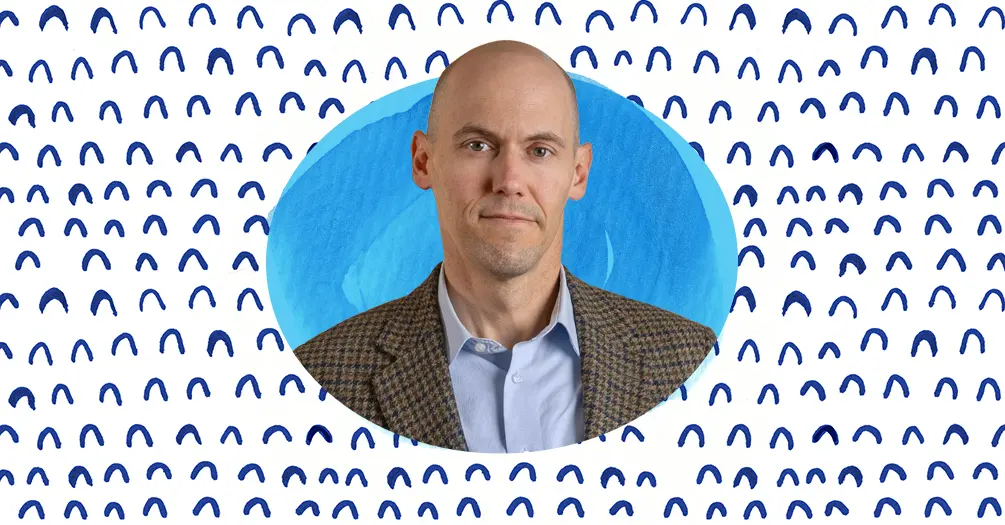
0:01:24.8 Justin Heinze Welcome to Population Healthy from the University of Michigan School of Public Health. My name is Justin Heinze. I'm an associate professor of Health Behavior and Health Equity at the University of Michigan School of Public Health and co-director of U of M's National Center for School Safety. Today, we're exploring an issue touching the lives of nearly every US student, school safety drills. With the alarming frequency of active shooter incidents, these drills have become a necessary but sometimes controversial experience in schools. My current work focuses on understanding their effects, both intended and unintended, on our students and school communities.
0:02:14.0 To start, I want to clarify what I mean by school safety drills, especially active shooter and lockdown drills, and why they've become so common. If I look at shootings in schools across the last 20 years, for a long time, from about 2000 all the way up to right before COVID, the rates of school shootings, the numbers that we had every year, were pretty steady. But we've seen this really disconcerting spike since COVID in the last about five years in both the frequency and severity of shootings that are happening within schools. So they're becoming more common and more people are getting injured.
0:02:50.0 And that's really served as a rationale for a variety of different approaches to try to address what is a disturbing trend. And school shooter drills, active shooter drills, are just one of those potential solutions. Now, there are a lot of different ways that we can conceptualize and implement a drill. So they start with something that is more staff-focused, like a tabletop exercise or a walkthrough where you're kinda describing what's gonna happen. Lockdown drills, as we typically think about them, are where we're trying to train students what they should do if there is an active shooter event. So you're gonna go into a classroom, you're gonna lock the doors, turn off the lights, and practice those steps.
0:03:26.9 That's contrasted from what might be considered options-based training. So if you've heard the term, “Run. Hide. Fight,” these are the different things that you might do depending on the situation. So you're giving people some autonomy about how to respond in a given situation. And then the last form of drills, and I think is one of the impetuses for why they've been so much of a focus, are simulations. And this is where we're trying to create an experience where students think, and staff as well, that there might actually be a shooter in the building, and what do they do? What is that sort of visceral reaction
0:03:56.8 So depending on the sort of drill students are experiencing, we are finding that it can have very differential effects. But this is something that's occurring pretty regularly throughout the school year. So around 95% of schools participate in some kind of drill. Last time I checked, there were about 37 states that mandated active shooter drills, including my home state of Michigan, where schools are required to do three every year. That's usually in partnership with some form of law enforcement. You could also be working with companies, and what had that's resulted in is a variety of different sorts of drills and experiences for different students all around the country.
[music]
0:04:40.8 So while over 90% of US students will participate in an active shooter drill this year, the truth is, we know little about how well these drills actually prepare schools for emergencies or their psychological impact on both students and staff, and why is that? I think it's because drills flew under the radar for a while. It wasn't until we saw some pretty extreme examples of simulations happening within schools. Students that were exposed to simulated gunshots or smoke. Sometimes they had actors in the halls who were pretending to have been shot. These were designed to elicit a visceral reaction and train students and staff what to do in a real-life emergency. The problem was some of the people in the building thought these were real events that were happening, and they were calling their parents, they were calling the police, and it was having this extreme reaction and was highly publicized and it sort of drew attention to this work.
0:05:40.5 And just as an aside, those sorts of simulations, all the evidence suggests that they do not work. It's a little bit like when we saw busted up cars in front of schools to try to dissuade students from drinking and driving. But because they were sort of unknown for relatively long periods of time, there's just not a whole lot of research that happens. And what research does exist at this point is focused more on student and staff experiences rather than their effectiveness at actually training students about what to do in an emergency. So thinking about those evidence gaps, as well as some of the challenges that researchers face, I think you can understand that there's a reason why active shooter drills haven't seen a lot of attention. Part of it is because school shootings, thankfully, are still pretty rare. So it's hard to measure how well a school that's been conducting active shooter drills actually does prepare students to respond in an emergency.
0:06:39.7 There's not any kind of requirement that schools report what sort of drills they participate in. And there's no national data that I'm aware of that sort of shares how schools are implementing these trainings and whether or not students feel prepared because of them, and I see this in practice. I've experienced drills in schools. I've watched students during these drills. I've seen some laugh and joke. I've seen some sort of look anxious in a corner, and I've seen some just trying to follow the instructions. And so trying to find drills that are going to speak to all the continuum of students that are attending our schools is a challenge.
[music]
0:07:19.6 As more of the work on attitudes and feelings of preparedness gets out there, I've seen an important shift in the questions researchers are asking. Specifically, how do these drills impact different populations? So I'm thinking about students with disabilities, dual language learners, and children with special needs. You can see some stories that are just really troubling. For example, a student in a wheelchair that is left out in a hallway during an active shooter drill because there's not a protocol, or an entire class of students learning with disabilities that weren't even notified when a drill was happening. So schools need to be thinking about the entire spectrum of students and staff within their buildings. And when we think about standardizing protocols and trying to create sort of one-size-fits-all approaches, that's not going to be effective. We know there are students with unique needs, and drills that exist to this point don't tend to be encompassing. It's one of the findings from the National Academy of Sciences report that I think is really important to be thinking about.
0:08:26.6 How are we designing drills that can be trauma-informed? So trying to make sure that we can understand that these drills can be scary, that they might create these reactions, and how do we address those things, but then also meeting different students' needs. And this is where I think our public health approach can be incredibly valuable here. What do public health researchers want to do? We want to hear from the populations affected. In this case, we want to hear from student voices. We want to hear from people who have lived experiences with shootings within schools. We actually had an opportunity to hear from populations that were affected to tell us how they felt about their experiences with drills, and hearing those stories creates new insights, not just in the way that we might create and package these drills, but then also what do we do afterward? How can we support those that have experienced these drills?
0:09:19.5 If we believe that they're a necessity, we believe they need to happen, we need to make sure that we're also prepared to work with students, to work with staff after these have occurred so that they can reintegrate into their learning plans, their learning spaces, and feel comfortable moving forward. Another reason why I think getting those student voices, those staff voices is, we need to look beyond just immediate reactions. And when I think about the bulk of the research, you're trying to understand how students are thinking about the drills at that time. But we need to understand, are there also longer-term effects on individual emotional, social-emotional, mental health as a result of participating in these active shooter drills? As an example, my colleagues have spoken to who are now emerging adults, so folks in their 20s, about their experiences with drills, and they remember. Just like folks from Boomer's generation, Gen-Xers like myself can remember duck and cover, today's students will absolutely remember drills that they experienced in schools.
0:10:22.1 For some students, when we talk to them, it's the first thing that comes to mind when we ask about school safety, and those responses are incredibly varied. For some, they get it. We've had to do it. I understood what they wanted for us to do, and that's where they leave it. For some, it was anxiety-provoking. It reminded them of something that they'd experienced. It made them feel like their school was a place where a shooting could happen. For some, they thought it wasn't taken seriously. They thought it was only treated as a little bit of a joke. Each student has a potential reaction to these experiences. And so how can both researchers, but then also practitioners, be on the lookout for where students might need help, where they might be experiencing some sort of residual anxiety or stress or potentially trauma from going through these experiences
0:11:11.6 Particularly in the cases where the drill is experiential, they are made to feel like this could be happening. Simulations are an extreme example of that, but even going through the process of locking the doors, shutting off the lights, hiding in what's called a hard corner, so a place where you can't be seen, can be intimidating for some individuals. And so recognizing that range of experiences and how that might stay with students after the end of the school day, I think is a critical aspect of the completeness of an active shooter drill. It's not just the time that's spent in school. So it's difficult to measure how drills are conflated with other experiences of school safety, but certainly from the data that we've collected, we know that drills can have these influences or effects on students. And so thinking through how drills can be designed to ensure that we are addressing student concerns both during the drills and following those experiences is going to be important for how data can inform the development of these drills.
[music]
0:12:22.2 So here's the good news, at least from my perspective. I'm seeing efforts are already being made to address some of these concerns, beginning with looking critically about how these drills are actually carried out in practices. So what are some of those best practices that are emerging and what sort of features can we include in drills that will minimize these negative health and psychological effects? The first thing that I would recommend is thinking whether or not the drills that you are planning to implement are trauma-informed. So very simply, trauma is a psychological experience that sort of stays with you, and we have to recognize that people in your school building possibly have experienced some form of trauma.
0:13:03.6 And when you introduce something like the idea that there could be a shooter in the building, or you create an experience that reminds them of a shooting experience or some other trauma in their life, it could have a very negative psychological and emotional effect. So designing drills that will minimize the likelihood that those reactions will be elicited are critical, and then making sure that there are supports for those that could experience stress because of that experience is incredibly important. Second one, communication with families. There are a number of parents that I've now talked to across the country that had no idea that their school was even conducting drills, let alone the day that they were happening. I think this is particularly important because one, parents are a very, very important part of the school safety conversation. They can be another resource to help a student that might be feeling some stress or anxiety.
0:13:58.0 They can support their students. They can have conversations with them before they come to school and help make decisions about how their student can be supported. The next one is what form those drills are going to take. As I mentioned, there are different ways that our schools are using active shooter drills. Leadership, teachers, students, parents are going to need to come together and make a decision about how best to train students to respond to emergencies. The next consideration in my mind is the staff and support systems that schools have in place. And this is, I think, part and parcel to what I call debriefing that could happen after an active shooter drill. Oftentimes, when a drill ends, students are asked to go back to class and they continue on with their learning day.
0:14:45.4 We suggest, and we think the data point to the value of having at least some time set aside for conversations with students, with staff about why these drills happen, allow space for questions, ideally identify any students that might have had a negative experience so that they can get to those support systems. And knowing that on these days when these drills are occurring, you might want to have a counselor or additional support available in case students are having a negative reaction to the experience. And then finally, we think it's very important to think through a call for a standard policy or practice of how these drills should be happening. Again, I mentioned 37 states have some sort of requirement for active shooter drills, but that varies so much by state. Oftentimes, the form that these drills take can vary considerably by district. Having some sort of national standards or guidelines, I think, will help to one, normalize the experience, ensure that there are not drills that can create unnecessary anxiety and stress for students, but then also, ideally, promote best practices like communicating with families, like debriefing following those drills, and making that sort of a standard operating procedure when drills are happening.
[music]
0:16:02.5 I think what's important to remember is that active shooter drills are not a black and white issue. Students and staff and researchers understand that they do have value, especially when done in a way that centers student experiences and try to reduce any unnecessary stress and anxiety. We're trying to find that balance between safety and well-being, and this is not true of only active shooter drills. It relates to a lot of the different forms of school safety approaches that we see happening throughout the country, whether that's school resource officers or behavioral threat assessment teams. We're trying to find a combination of activities that work for each individual school, support creating safer environments, but then also consider the psychological and emotional effects that safety-related activities can have on students. Which is also why we always recommend pairing social-emotional learning, mental health resources, and engaging those student voices as part of a comprehensive approach to school safety. The good news in my mind is that there is a greater recognition that some of the most intensive simulations can be harmful, and we're seeing fewer and fewer drills adopting those approaches. We're seeing at least greater recognition that we want to have a trauma-informed approach when implementing active shooter drills, and more and more schools are reaching out for guidance on how best to do these things.
[music]
0:17:36.4 At the end of the day, we all share responsibility for supporting safe, healthy learning environments. I like to say that the school safety table has a spot for everybody. Whether you're a parent, educator, student, or an advocate, you can ask the question, how are drills conducted in your school? Are student voices included? What supports are in place for students after those drills? Raising those questions, sharing your own experiences, and pushing for evidence-informed practices can help ensure safety efforts truly benefit everyone. For more information, visit the Population Healthy website or the National Center for School Safety. Thank you for joining to learn more about this important topic.
[music]
0:18:24.2 Thanks for listening to this episode of Population Healthy from the University of Michigan School of Public Health. Visit our website, population-healthy.com, for more resources on the topics discussed in this episode and to find more episodes. Population Healthy is produced by Crissy Zamarron with help from Destiny Cook and Anne Reilly. If you enjoyed the show, remember to subscribe, rate, and review wherever you listen to podcasts and consider sharing this episode with friends.