
Health and Well-Being Support
We all need to feel well to do well. There are many campus and community resources devoted to helping you manage your overall well-being, including your mental and physical health.
Well-being Resources
- Resource and Success Coaching
- Mental Health
- Physical Health
- Sports and Recreation
- Religion and Spirituality
Join the Well-being Community at the School of Public Health
Are you interested in receiving information about health and well-being? If so, please join our well-being at U-M Public Health email group.
Opt-in/Opt-out Instructions:
- go to MCommunity
- select "Log In" and enter your uniqname and password
- Switch the search criteria from "people" to "groups"
- Search for "Well-being at U-M Public Health"
- select "join" or "resign"
Resource and Success Coaching
Need help finding the right resource? Hanna Swift Bird, Student Success Coach, provides individualized attention and support to students, so they can thrive in their program. Students can schedule one-on-one coaching sessions with Hanna for support with:
- Academic success (time management, habits, imposter syndrome, burnout, etc).
- Well-being (work-life balance, food security, social engagement, etc.)
- Student community support (first-gen, international, students who are parents, etc.)
- U-M resource sharing (CAPS, SAPAC, SSD, etc)
- Just to say hello and meet someone new!
Well-being for U-M Students
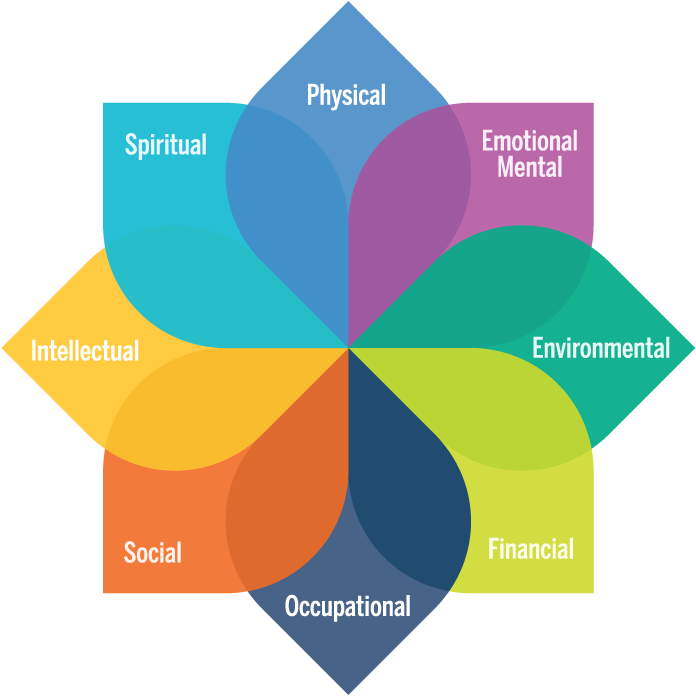
The University of Michigan has a website dedicated to your well-being journey. Please explore the Well-being Collective to learn about policy changes, resources, campus events, and more.
The Well-being Toolkit
The U-M Well-being Toolkit brings together the vast number of well-being tools that are available across Student Life for you, our students! You’ll find a variety of interactive, customizable and adaptable tools that promote a holistic and inclusive understanding of well-being. Browse it by category, or if you are looking for a specific topic you can also search by tag.
Mental Health
Embedded Counselor in the School of Public Health
Joseph (Joe) Rizzo | School of Public Health Embedded CAPS Counselor
M1519 SPH I | Email Joe Rizzo (joerizzo@med.umich.edu) for questions or to make a counseling appointment.
University Health & Counseling, which includes medical services (UHS) and Counseling & Psychological Services (CAPS) plays an important role in supporting the emotional well-being of students at the University of Michigan by providing counseling services, medication management of common mental health issues, and educational programming, consultation, and outreach.
UWill: Student Mental Health & Wellness
Uwill Teletherapy Service is an addition to CAPS services that provides students with video, phone, chat, and message sessions with licensed mental health professionals at no cost. To access the Uwill platform, visit app.uwill.com. From there, register with a University of Michigan email address.
Togetherall
Create a Free Togetherall Account
- Enter your U-M email address
- Complete the short online form to create an account.
- Verify your email address
Interactions on the online peer-to-peer platform, Togetherall, are anonymous and supervised 24 hours a day, seven days a week by licensed mental health practitioners.
Togetherall can be helpful for students as a first step to seeking help who might otherwise find it difficult to approach an office, or a person, and verbally express their needs. The service is available to students for free and joins U-M’s two additional peer support-based offerings for students: the Wolverine Support Network and Individual Peer Counseling.
Wolverine Support Network
Wolverine Support Network (WSN) empowers University of Michigan students to create an inclusive community and support each other’s identity, mental well-being, and day-to-day lives.
Individual Peer Counseling
Individual Peer Counseling (IPC) is designed to offer students the opportunity to meet with peers who are trained by the professional staff at UM’s Counseling and Psychological Services (CAPS). The IPC program connects students with someone of a similar age and lifestyle who can serve as a resource or simply someone to talk to.
Physical Health
Nutrition Counseling Center
The School of Public Health Nutrition Counseling Center (SPH NCC) is open to all UM students and is sponsored by the Department of Nutritional Sciences as part of their dietetics training model.
The SPH NCC is a peer-to-peer nutrition counseling program where entry-level Masters dietetic students meet individually with clients seeking nutrition counseling under the supervision of a Registered Dietitian Nutritionist (RDN). Peer-to-peer counseling allows the student counselor to build confidence and self-esteem in a safe environment, while connecting and engaging with their peers. Student counselors will use a Motivational Interviewing approach to guide sessions. Examples of counseling session topics include better meal planning, eating tips for increased energy, grocery shopping tips, eating on a budget, digestive issues, or overcoming barriers that prevent better nutrition. While our counselors are able to help with basic nutrition concerns, they are unable to assist with disease-specific or complicated needs. If this is you, please make an appointment with the RDN at University Health Services.
Appointments are generally 30-45 minutes and can be via Zoom or in-person at the SPH NCC Wellness Center space located in SPH II room 5327. Additional information can be found in our FAQs. If you’d like to make an appointment please go to our Acuity Scheduling platform.
University Health & Counseling (UHC)
University Health & Counseling (UHC) is your campus health and wellness resource. Made up of medical services (UHS) and Counseling & Psychological Services (CAPS), UHC offers a number of resources and clinics to students. There are no out-of-pocket costs for all services through CAPS and nearly all medical services (some services, such as immunizations, prescriptions, imaging, or some labs may be billed to insurance or require out-of-pocket payment; lab tests for common STIs and hormonal testing for trans care are not billed)
Health Insurance
Students have no out-of-pocket costs for most visits and services at UHC, including all services through CAPS, clinic visits, 24/7 nurse advice, and more. These services are covered by a health service fee (HSF) which is automatically included in tuition. Nevertheless, having personal health insurance is important for access to services not covered by the HSF and for emergencies when you need to seek care outside of UHC. UHC offers select insurance plans, including health insurance for domestic students (international students have required plans) and tuition refund insurance.
Dental Health
The University of Michigan School of Dentistry offers a wide variety of dental services to the public and University community. Service is provided by supervised student providers or specialty residents.
The Dental Faculty Associates is a private practice setting within the School of Dentistry where patients are treated exclusively by faculty dentists. The Dental Faculty Associates offer a full range of dental services.
Michigan Medicine
https://www.uofmhealth.org/, located at 1500 E. Medical Center Dr., offers inpatient and outpatient care, in addition to vast research and teaching facilities. The eight-unit complex includes University Hospital, Von Voigtlander Women’s Hospital, and C.S. Mott Children’s Hospital. More than 110 specialty services, ranging from Emergency Services and Obstetrics-Gynecology to Pediatrics and Psychiatry, are available. The costs of care at Michigan Medicine, however, are not covered by student fees. Check with your health insurance for questions about copays and coverage.
Sports and Recreation
U-M Recreational Facilities
There are three indoor U-M Department of Recreational Sports facilities:
- Palmer Field Temporary Facility
- North Campus Recreation Building (NCRB), 2375 Hubbard Rd.
Memberships are available to students, faculty, staff, alumni, and the general public. All University of Michigan students have an automatic membership which includes access to all of the facilities when they pay their student activity fee each semester.
Rec-sports Programs
The University of Michigan Adaptive Sports & Fitness (ASF) department is committed to making sports and fitness more inclusive and accessible for everyone—whether you have a disability or not. Our mission is to increase awareness about, knowledge of, access to, and participation in adaptive sports and fitness among people with and without disabilities at the University of Michigan and in the greater Ann Arbor community.
ASF offers weekly opportunities to get active and compete in a range of adaptive sports, including:
- Wheelchair Basketball
- Wheelchair Tennis
- Wheelchair Rugby
- Adaptive Track & Field
- Strength & Conditioning
- Para Powerlifting
Whether you're looking for high-level competition or just want to try something new, there’s a place for you at ASF.
Stay in the loop!
Sign up for our newsletter to get the latest updates, event info, and details on how to get involved.
MHealthy Exercise and Relaxation Classes
University of Michigan faculty, staff, students and the general public can register for more than 100 MHealthy Exercise and Relaxation Classes, including yoga, Pilates, Zumba, body sculpting, spinning, step aerobics, and much more. Classes are offered at various locations on or near the University’s Ann Arbor campus.
Kinesiology Community Programs
Kinesiology Community Programs has been providing group exercise classes for over 30 years. It offers a wide variety of group exercise and wellness classes to University of Michigan faculty, staff, students, and others affiliated with the university. Cardio, strength and conditioning, yoga and Pilates classes, as well as instruction in swim, tennis, golf, and Tae Kwon Do are among the offerings. Most are held at the Central Campus Recreation Building.
Ann Arbor Rec & Ed
Ann Arbor Rec & Ed offers cardio classes, water aerobics, weight training, Pilates, yoga, Zumba, dance, and many other health and wellness classes for children and adults year round. Check the website for schedules and fees.
Ann Arbor YMCA
The Ann Arbor YMCA, located at 400 W. Washington, has free-weight areas, exercise machines, and a swimming pool available for members. Additionally, they offer aerobics, weight training, martial arts, yoga, spinning, and other fitness classes year round for a fee (no membership necessary).
Religion and Spirituality
Reflection Rooms
There are a number of reflection rooms on campus and at the School of Public Health intended for students and other members of the university community to pray, meditate, and otherwise spend time in quiet reflection.
Religious/Spiritual Student Groups
Visit Maize Pages to view a list of student groups with a religious or spiritual focus and links to group information.